Designing a home involves hundreds of decisions—many of them made before construction begins. For most homeowners, the challenge is not choosing finishes or furniture, but understanding how everything will come together in the final space.
Interior design visualization solves that problem.
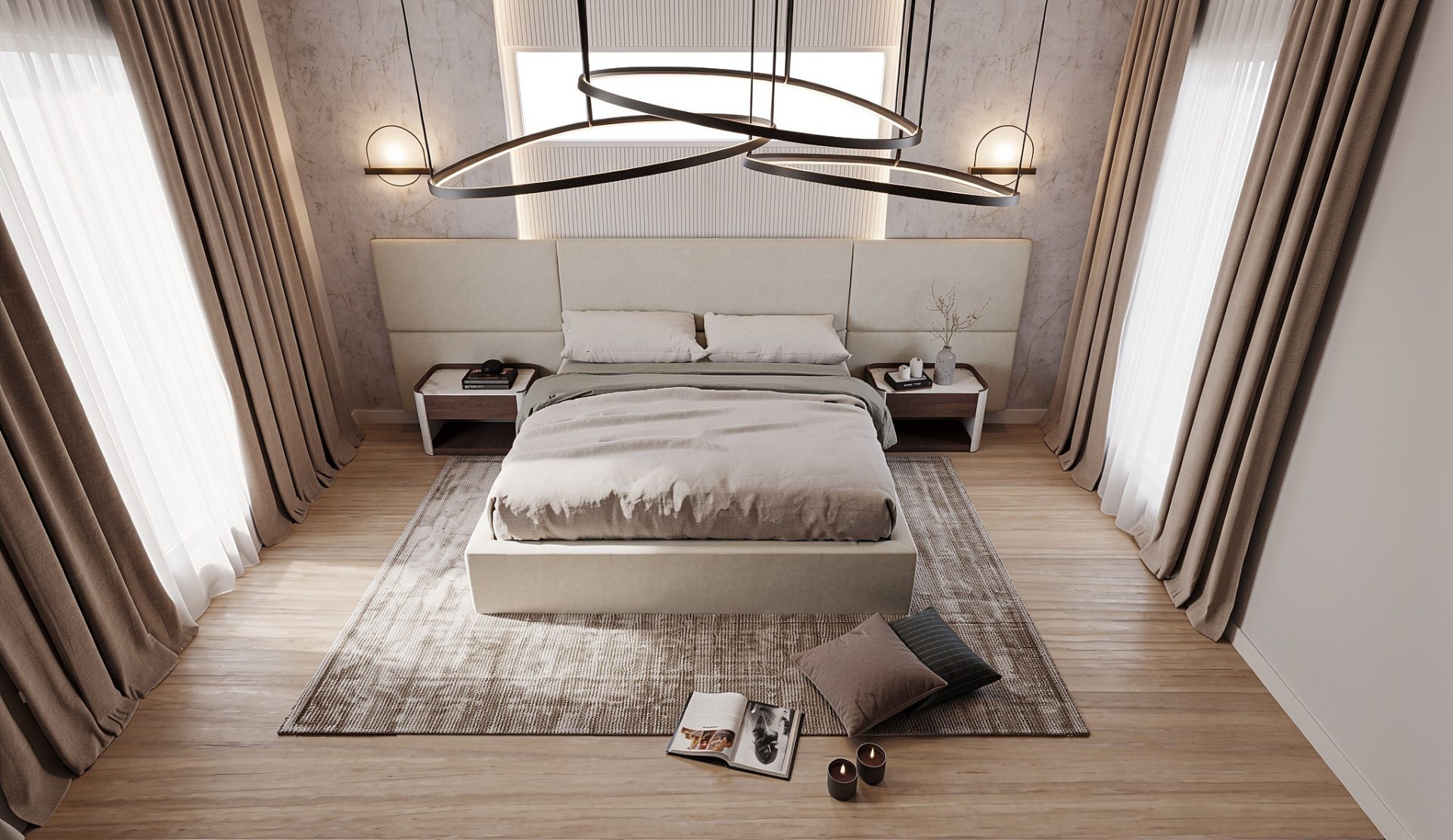
Through 3D modeling and photorealistic renderings, clients are able to experience their home before it is built—evaluating layout, materials, lighting, and overall atmosphere with clarity and confidence.
Interior design visualization is a process that uses:
- 3D modeling to define layout, proportions, and structure
- photorealistic renderings to simulate materials, lighting, and atmosphere
Together, these tools allow clients to see and evaluate their space before construction begins.
Unlike traditional drawings or mood boards, visualization provides:
- accurate spatial understanding
- realistic representation of finishes and textures
- clear lighting conditions and ambiance
- a complete picture of the final design
Real Example: Primary Bedroom Transformation in Alpharetta
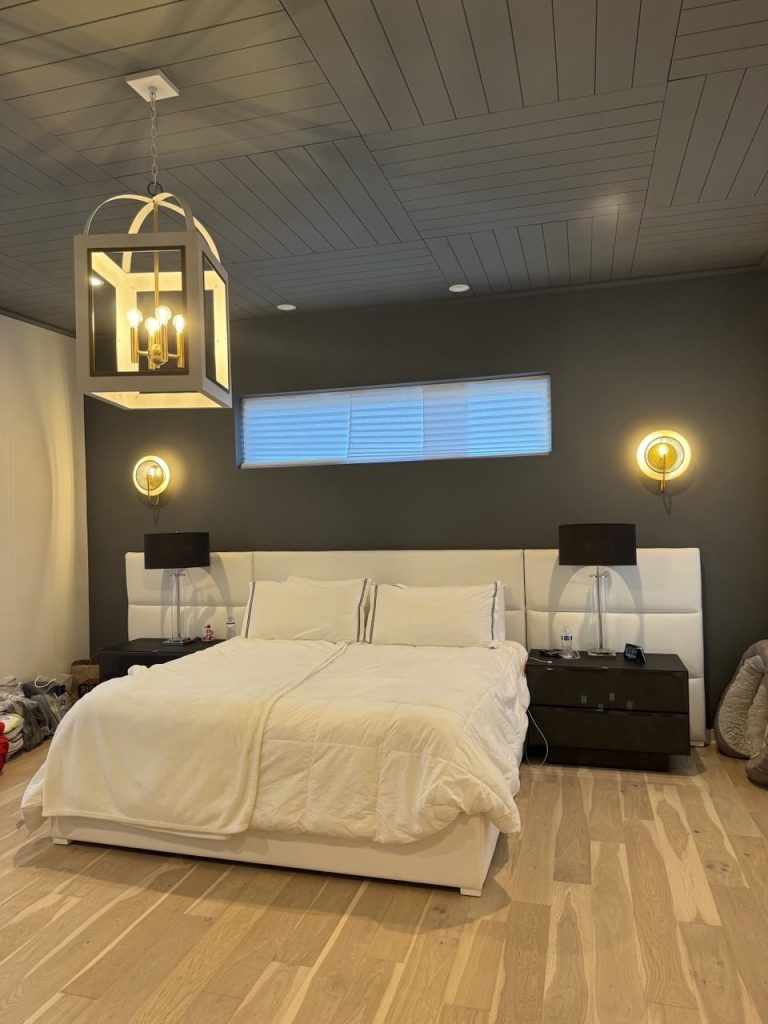
This project began with a space that felt visually disconnected.
There was:
- no clear design direction
- inconsistent finishes
- lack of cohesion between architectural elements
- no defined focal point
The room had potential—but it lacked flow, balance, and identity.
Identifying Design Challenges
Before any design work begins, it’s critical to understand what is not working.
In this case, the key issues were:
- fragmented material palette
- absence of layered lighting
- underutilized wall space
- lack of visual hierarchy
Without proper visualization, solving these issues would rely heavily on interpretation.
3D Modeling — Structuring the Space
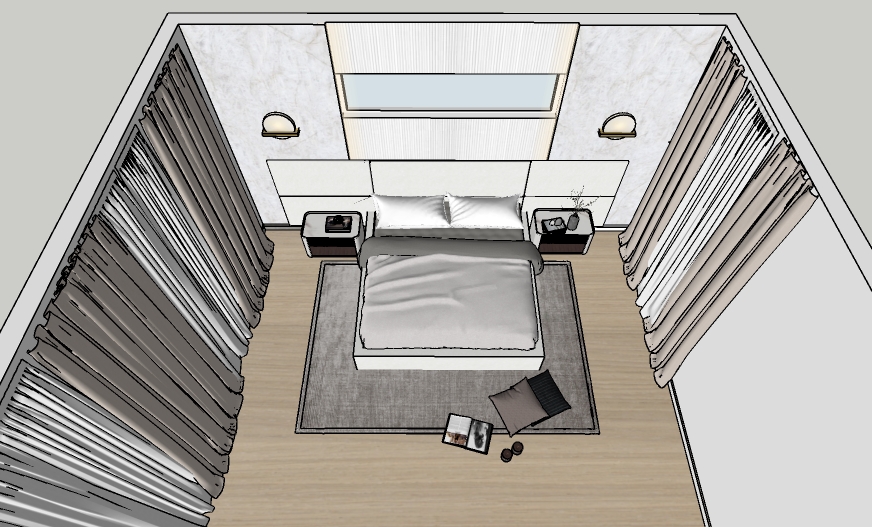
The first transformation step was 3D spatial modeling.
This phase focuses on:
- redefining layout and proportions
- establishing furniture placement
- introducing architectural elements such as wall paneling
- creating alignment and symmetry within the space
At this stage, the goal is not final aesthetics—but functional clarity and spatial balance.
This allows both designer and client to evaluate how the room will work before deciding how it will look.
Photorealistic 3D Renderings — Bringing the Design to Life
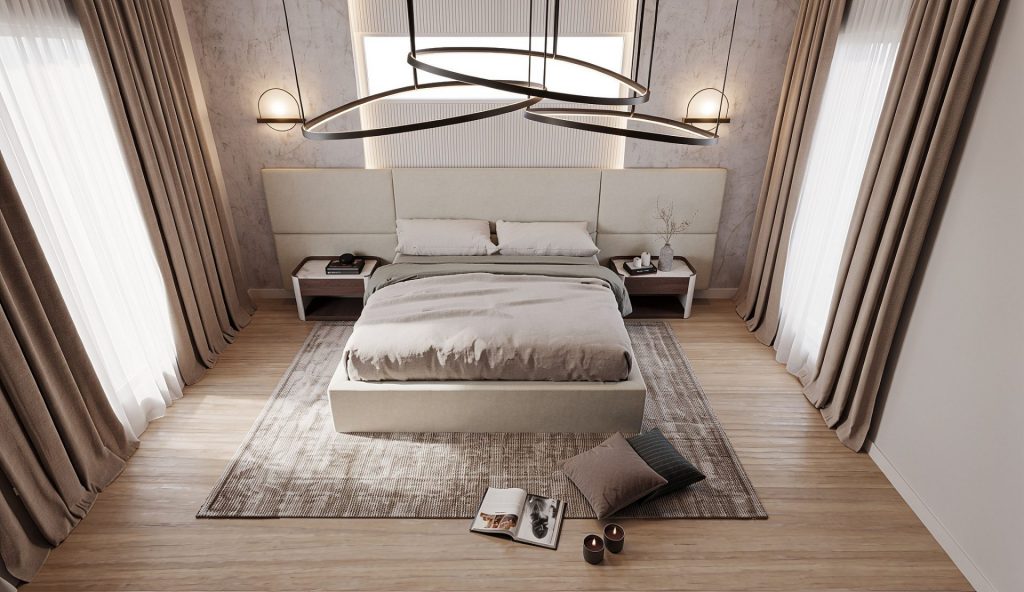
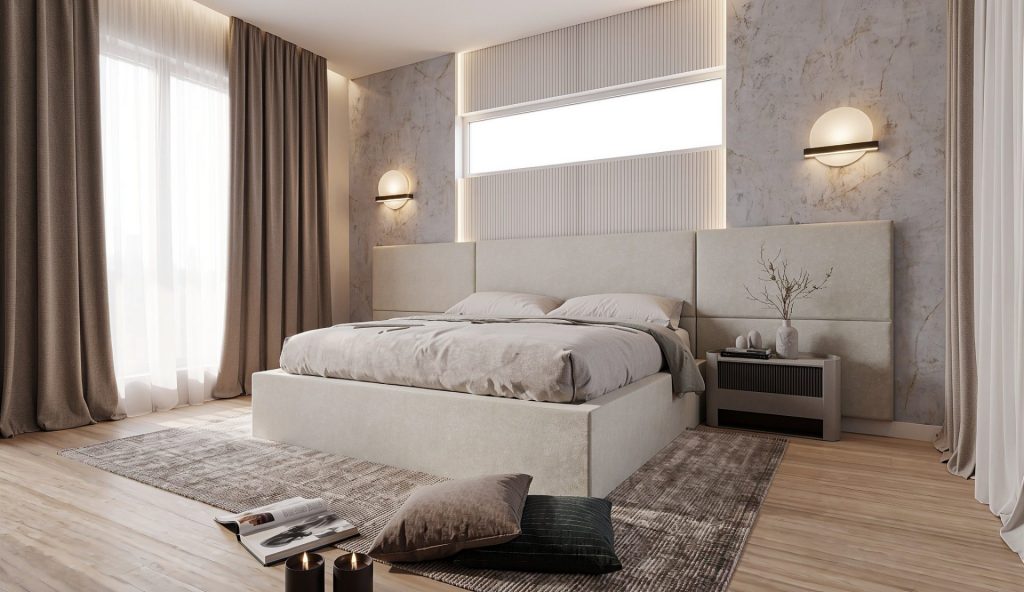
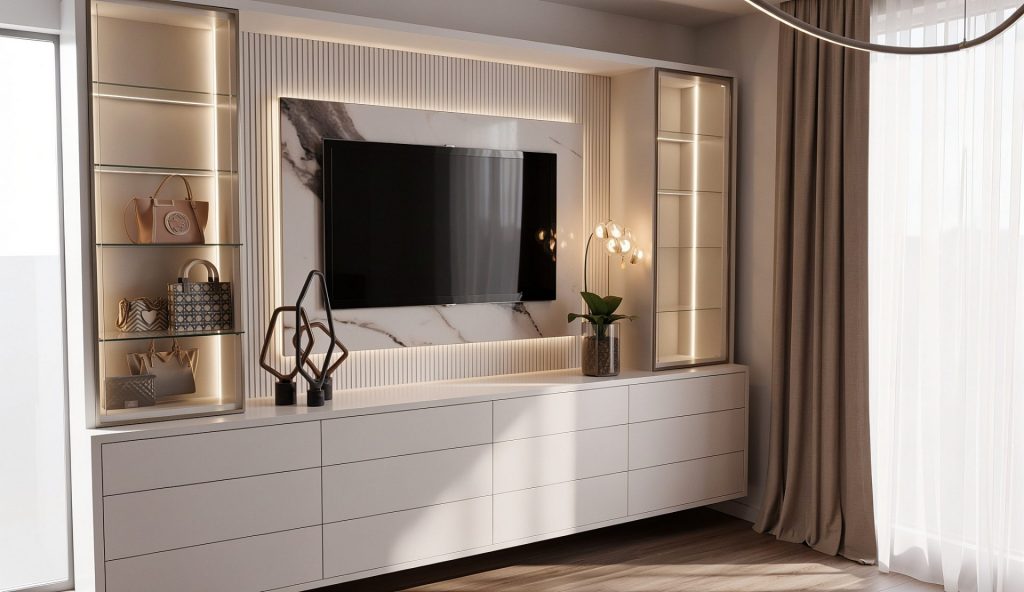
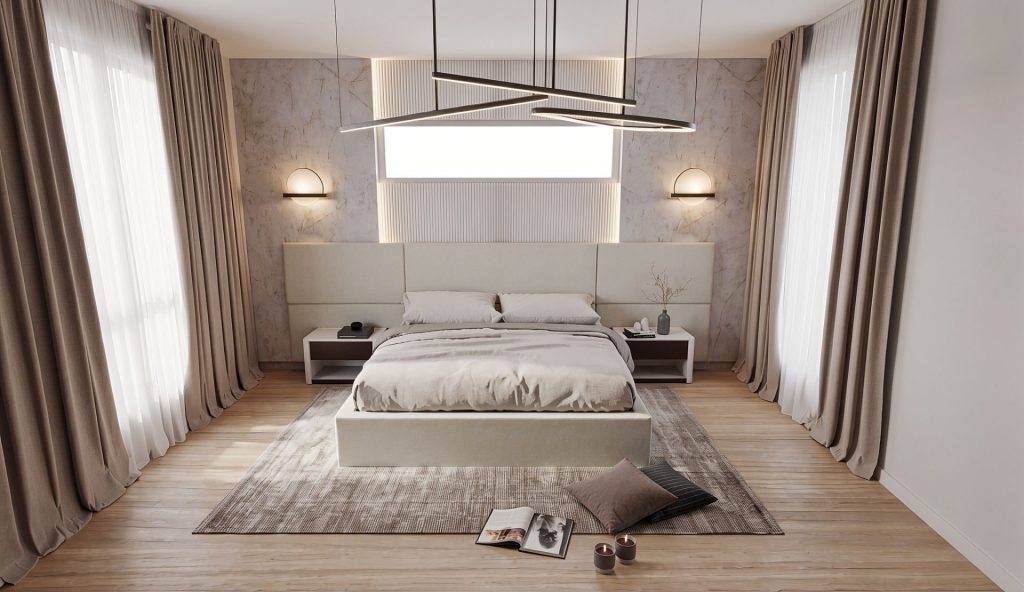
Once the layout is resolved, the design is developed into photorealistic interior renderings.
This is where the transformation becomes fully visible.
In this project, we introduced:
- a refined neutral color palette to unify the space
- modern finishes that elevate the overall aesthetic
- layered lighting (ambient, accent, and decorative) to create depth and atmosphere
- a defined focal wall with integrated textures and lighting
At this stage, clients can clearly see:
- how materials interact
- how lighting affects mood
- how the space feels throughout the day
Refinement and Design Alignment
With a fully visualized space, design decisions become precise and intentional.
This includes:
- adjusting finishes before ordering materials
- refining lighting placement and intensity
- ensuring millwork proportions are accurate
- aligning all elements into one cohesive composition
Instead of reacting during construction, everything is resolved in advance.
Why 3D Renderings Matter for High-End Residential Design
In luxury interior design, small details make a significant difference.
Elements such as:
- lighting placement
- material transitions
- proportions and symmetry
- texture layering
must work together seamlessly.
3D renderings ensure that these elements are not left to interpretation—but are fully resolved before execution.
Where This Process Is Most Valuable
Interior visualization is especially beneficial for:
- primary bedrooms
- kitchens and bathrooms
- custom millwork and built-ins
- full-home renovations
- new construction projects
Photorealistic renderings are widely used across architecture and design industries to accurately communicate spatial concepts before construction. Any project that involves multiple design elements benefits from being fully visualized in advance.
3D renderings and photorealistic visualization transform interior design from an abstract process into a clear, structured, and predictable experience.
Instead of imagining the result, clients can see it, refine it, and move forward with confidence.
This is what allows a design to move from concept to precision—and ultimately, to a successful final outcome.
